Get Natural-Looking Crowns and Bridges in Creve Coeur, MO
Creve Coeur Dental specializes in natural-looking, durable dental restorations that enhance the function and health of your teeth and the beauty of your smile. We may recommend a dental crown or bridge if you have a missing tooth, tooth damage, decay, dental cavities, or have undergone a procedure like a root canal that has affected the strength or structure of your tooth. Call now to make an appointment with Dr. Dubina and our team to discuss your options and determine if you need a dental crown or bridge in Creve Coeur, MO.
Understanding the Purpose of a Dental Bridge vs. Crown
Both dental bridges and crowns are restorative dentistry procedures that restore the function and stability of your teeth. However, they serve different purposes, and the procedures used are different. Here’s a closer look at each treatment:
- Dental Crowns – Dental crowns are cap-shaped dental restorations that fit over the top or the chewing surface of your tooth. They are made from metal or a composite material that is dyed to match the color of your natural teeth. They are used to protect a tooth that is weakened due to damage, trauma, decay, or infection. They can also restore the structure and function of a tooth after a root canal procedure. We may also use crowns to support a dental bridge.
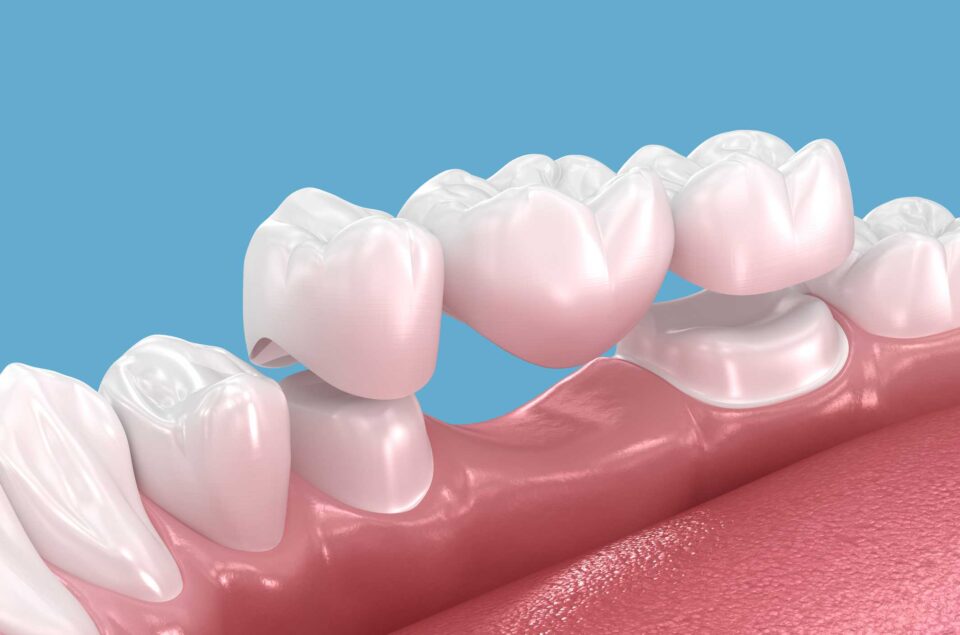
- Dental Bridges – A dental bridge is also a dental restoration, but it is used to replace one or more missing teeth. If we need to extract your tooth due to damage, decay, wear and tear, infection, or another serious issue, you will need a replacement to maintain your oral health and ability to chew and speak properly. Dental crowns are placed on the natural teeth on either side of your missing tooth or teeth to provide support or anchor a prosthetic tooth or dental implant.
Preparing for Dental Crowns and Bridges
Before we determine which treatment you need, we will perform a dental exam, take dental x-rays, and make dental impressions. We will also ask you questions about your oral hygiene routine, diet, lifestyle, and any symptoms you have. We can then make a recommendation for treatment. We offer a range of restorative and cosmetic dentistry options, and can combine treatments to address multiple issues easily and comfortably. Once we have created a treatment plan, we will go over the procedure so you know exactly what to expect. We will also give you personalized instructions for pre- and post-treatment care.
Properly Caring for a Temporary Bridge or Teeth Crowns
Like your natural teeth, dental restorations like crowns and bridges also need to be cared for. Proper care will protect your oral health, help you avoid complications, and ensure the continued comfort and function of your restorations so they last as long as possible. Some tips for caring for your crown or bridge, whether temporary or permanent, are:
- Brush your teeth twice per day or after each meal using a soft-bristled toothbrush and fluoride toothpaste.
- Floss at least once per day.
- Use a fluoride or antiseptic mouthwash once or twice per day.
- Avoid hard, chewy, and sticky foods.
- Don’t chew on ice or pens, bite your nails, or open packages with your teeth.
- Drink plenty of water each day.
- Avoid overconsumption of alcohol.
- Quit smoking.
- Take any antibiotics or other prescription medication as recommended.
- Wear a mouthguard if you play sports, and a night guard if you have been diagnosed with bruxism.
- Visit us every six months for a dental exam and cleaning
Schedule a Consultation With a Dentist for Bridges & Crowns
If you are missing a tooth or multiple teeth, or have tooth damage or decay, contact us at Creve Coeur Dental and seek solutions as quickly as possible. We can determine if you would benefit from an all-porcelain dental bridge or crown. These dental restorations are natural-looking, comfortable, and durable, and can reduce your risk of gum disease, further damage, and speech and bite difficulties. In addition, dental bridges eliminate the possibility that your remaining teeth will shift to fill the gap left by a missing tooth. If you need dental treatment for a painful, damaged, or missing tooth, give us a call or contact us online to schedule an appointment.
FAQs About Crowns and Bridges
We use porcelain crowns and bridges. These can be matched perfectly to your natural teeth so that no one will know that you have a dental restoration. There are several types of dental bridges, each chosen according to your needs and the location of the missing tooth. With a traditional fixed bridge, the replacement tooth is held in place by two crowns, and the bridge is only removable by a dentist. A resin-bonded bridge is ideal for front teeth and in situations when the surrounding teeth are healthy, with no large fillings. Cantilever dental bridges are used when there are teeth on only one side of the gap. No, the process is not painful. We use anesthesia to ensure your comfort. Dental bridges, regardless of type, are placed in two visits. In your first appointment, our providers will prepare the teeth surrounding the gap, then take an impression and place a temporary bridge. The impression is used as a guide for the crafting of the bridge’s false tooth and crowns. You will wear the temporary bridge until your next appointment, during which your permanent bridge will be cemented into place, fitted, checked, and adjusted. After your exam, we will explain all of your restorative dentistry options. Depending on the location and extent of damage or injury to your teeth and/or gums, you might be able to consider inlays or onlays, dental veneers, or dental fillings. Porcelain crowns and bridges can last up to 15 years if you care for them properly. Their lifespan can be shortened by poor oral hygiene, bad habits, injury, decay, and infection.